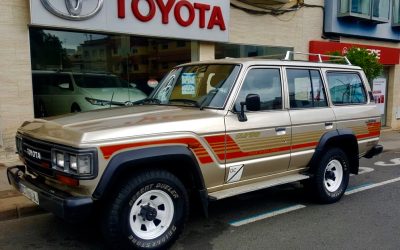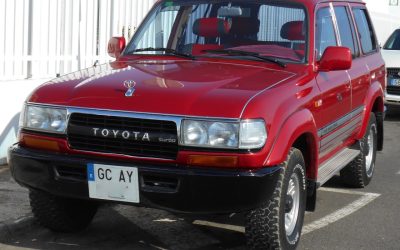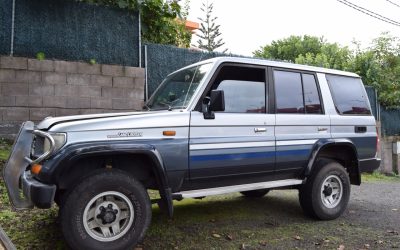

Spanish ITV records are useful evidence. They are not a full condition report.
That distinction matters when a buyer is looking at an older Land Cruiser, Defender, Patrol, Pajero, Mercedes, or any other classic 4×4 from the Canary Islands. A current ITV can tell you that the vehicle passed a regulated inspection on a particular date. It can also give useful clues about identity, mileage history, defects, and continuity of use.
It does not prove the vehicle is rust-free. It does not prove the drivetrain is healthy. It does not prove the paperwork is ready for export. It does not replace a proper inspection by someone who knows what they are looking at.
At Canary Island Rover, we treat ITV records as part of the evidence file. They help direct the inspection. They do not replace it.
What ITV means in Spain
ITV stands for Inspección Técnica de Vehículos: Spain’s periodic technical inspection system for vehicles. For an older buyer, the useful idea is simple: ITV is a legal roadworthiness and emissions inspection, not a pre-purchase inspection.
A station checks the vehicle against defined inspection procedures. The inspection can include identification, lights, brakes, steering, suspension, tires, body/chassis condition, emissions, and other safety or environmental items relevant to the vehicle category.
That makes it valuable. A vehicle with a long, consistent ITV history has at least been appearing in the Spanish system over time. On a Canary Islands vehicle, that can be useful when we are trying to understand whether the truck has been regularly used, whether the odometer story is plausible, and whether past defects appear in the available documentation.
It is important to note these ITV inspections are rigorous and the vehicle is put on dynos to test each driving component for safety. Also, most 4x4s are required by law to pass ITV every six months. Although, the ITV line is still a minimum legal line. A good purchase decision requires more than meeting the minimum.
What a favorable ITV can prove
A favorable ITV result can support several practical conclusions.
1. The vehicle passed on that date
The first and most obvious point: the vehicle was presented for inspection and received a favorable result. That is useful, especially when a seller claims the truck is road legal, current, and in regular use.
A current ITV is better than a story. It means the vehicle has recently cleared a regulated inspection process.
2. No disqualifying defects were recorded at that inspection
Under Spain’s ITV framework, defects are classified by severity. No defects, or only minor defects, can lead to a favorable result. Serious defects lead to an unfavorable result. Very serious defects lead to a negative result.
That matters because an ITV result is not just “pass/fail” in the everyday sense. If the vehicle failed, the category and description of the defects can tell you where to look first.
3. The vehicle’s identity was checked against documentation
An ITV inspection involves checking vehicle identity against the documents presented. For a classic 4×4 buyer, that is not the end of VIN/chassis verification, but it is a useful starting point.
The question still has to be asked physically: does the chassis number on the vehicle match the Spanish documentation, the seller’s file, and the export paperwork?
4. The mileage record may create a timeline
Where available, ITV and DGT records can help build a mileage chronology. That is especially helpful on older vehicles where odometer stories are common and service records may be incomplete.
A consistent mileage pattern does not prove the odometer is perfect. But it can support the story. A strange jump, long gap, or unexplained reversal tells us where to slow down.
5. It can show a pattern of use
A vehicle that has been inspected regularly, with mileage increasing in a normal way, tells a different story than a vehicle that sat for years and suddenly appeared for sale.
Neither story is automatically good or bad. A stored vehicle can be excellent. A regularly used vehicle can be worn out. The records simply give us a better starting point.
What ITV does not prove
This is where buyers get into trouble. A current ITV can create too much confidence if it is read as a complete endorsement of the vehicle.
It is not.
1. ITV does not prove the vehicle is rust-free
This is the biggest misunderstanding.
An ITV inspection may identify visible structural or safety-related corrosion when it is present and accessible. It does not mean the inspector dismantled trim, removed carpets, opened chassis sections, inspected hidden repairs, or searched every known corrosion point on a Defender, Land Cruiser, Patrol, G-Wagen, or Mercedes.
A clean ITV does not prove clean bulkheads, footwells, inner sills, rear crossmembers, spring mounts, body mounts, outriggers, chassis rails, roof gutters, floor seams, or repaired accident areas.
The Canary Islands can produce excellent older vehicles, but the islands are still a maritime environment. Sea air, outdoor storage, age, old repairs, and deferred maintenance all matter. “Has ITV” is not the same as “no rust.”
2. ITV does not prove the engine, gearbox, or transfer case are healthy
A diesel can pass ITV and still have cold-start issues, blow-by, cooling-system problems, tired injectors, turbo wear, weak compression, fuel leaks, worn engine mounts, gearbox synchro issues, transfer-case noise, differential whine, or a clutch near the end of its life.
A test station is not rebuilding the drivetrain in its head. It is checking the regulated inspection points.
For a classic 4×4, the expensive problems often live outside the simple pass/fail story.
3. ITV does not prove the vehicle is original
For import buyers, originality can matter. Engine type, emissions configuration, chassis identity, body configuration, and modifications can all affect eligibility, value, insurability, or registration at the destination.
A current ITV does not automatically prove the vehicle remains in original factory configuration. It also does not guarantee that a destination country, customs broker, state DMV, insurer, or historic-registration authority will interpret the vehicle the same way.
4. ITV does not prove export readiness
An ITV is a Spanish roadworthiness inspection. It is not an export file.
Before export, we still need to understand ownership, seller identity, registration status, transferability, possible cargas or administrative restrictions, vehicle description, chassis number, and the destination requirements. A vehicle can have a valid ITV and still need careful paperwork before it becomes a sensible export candidate.
5. ITV does not price the work
A favorable result does not mean “nothing to do.”
Older 4×4s usually need some combination of fluids, belts, hoses, tyres, suspension bushings, steering components, brakes, cooling-system attention, seals, interior repairs, cosmetic corrections, or preventive service.
ITV tells you something about minimum legal condition. It does not tell you what the first three months of ownership will cost.
Favorable, unfavorable, negative: how to read the result
For a buyer, the result category matters.
Favorable
This is the cleanest starting point. The vehicle passed the inspection, either with no defects or only minor defects.
That does not mean “buy it.” It means the vehicle cleared that legal inspection. Now the real buyer inspection begins.
Unfavorable
An unfavorable result means serious defects were detected. The defect list becomes important. A brake imbalance, emissions failure, lighting issue, tyre defect, suspension problem, or corrosion notation all point to different levels of risk and cost.
Some unfavorable results are simple and cheap to fix. Others are the first visible sign of a deeper neglected vehicle.
Negative
A negative result is more serious. It indicates a very serious defect that creates direct and immediate risk or environmental impact. A vehicle with a negative result is not a normal buying candidate until the underlying issue is understood, repaired, and properly re-inspected.
For export buyers, a negative result is a large red flag. It does not always mean “walk away,” but it does mean “stop and understand exactly what happened.”
How we use ITV records at Canary Island Rover
We do not ask, “Does it have ITV?” and stop there.
For a serious candidate, ITV records are compared against the vehicle and the seller’s story. The practical questions are:
- Does the registration document match the vehicle?
- Does the chassis/VIN marking match the documents?
- Is the ITV current, expired, unfavorable, or recently corrected?
- What defects have been recorded?
- Does the mileage pattern make sense?
- Do the photos, underbody, engine bay, interior wear, tyres, and service history agree with that mileage?
- Are there modifications that matter for export, insurance, or registration?
- Is the vehicle good enough to recommend before it becomes an international shipping project?
The important point is not to collect paperwork for decoration. The point is to make the paperwork argue with the vehicle. If the records and the truck agree, confidence rises. If they do not, we slow down.
The DGT report: useful, but still not the whole file
For Spanish-registered vehicles, a DGT vehicle report can provide important public information. Depending on the report type, it may include administrative data, ITV history, mileage, number of owners, technical data, cargas or limitations, recall information, and related maintenance information where available.
That makes it useful before buying a Spanish vehicle.
It is still not a substitute for physical evidence. A DGT report can help reveal a problem. It cannot tell you whether the inner chassis has been patched, whether the transfer case is noisy, whether the cooling system is tired, or whether the seller’s description is optimistic.
Documentation gives context. Inspection gives reality.
A practical ITV checklist for classic 4×4 buyers
Before treating ITV as a buying advantage, ask for:
- a copy or photo of the current ITV result;
- the ITV expiry date;
- any listed minor defects;
- past ITV reports if available;
- a DGT vehicle report where appropriate;
- photos of the vehicle documents, with sensitive data handled carefully;
- clear chassis/VIN photos;
- underbody photos in good light;
- cold-start video;
- driving video where practical;
- photos of known corrosion points for that model;
- evidence of recent mechanical work; and
- a realistic list of what still needs attention.
If the seller says “it has ITV” but cannot produce supporting documentation, the claim is not very useful. If the seller produces documents but avoids underbody photos, the documents are not enough.
The buyer mistake: using ITV as permission to skip inspection
This is the expensive mistake.
A buyer sees a current ITV, a clean exterior, a nice story, and a mild-climate island location. Then the truck arrives with rust in hidden places, tired suspension, an uncertain engine history, or paperwork that needs more work than expected.
The problem was not the ITV. The problem was asking ITV to do a job it was never designed to do.
The right use of ITV is narrower and stronger:
ITV helps prove that the vehicle passed a regulated Spanish inspection on a certain date. It does not prove that the vehicle is the right one to buy, import, restore, or register where you live.
That is why Canary Island Rover treats ITV as one evidence layer among many: documents, inspection, photos, video, road test, mechanical review, seller history, export pathway, and destination requirements.
The CIR position
A current ITV is a positive sign. A consistent ITV history is better. A DGT report with coherent mileage and no obvious administrative issues is better still.
But none of those things replace judgement.
For a classic 4×4 buyer, the question is not, “Does it have ITV?” The better question is:
What does the ITV support, what does it leave unanswered, and what do we still need to inspect before this vehicle is worth shipping across an ocean?
That is the question we build the file around.
Start with evidence, not assumptions
Tell us the model, budget, destination, timing, and condition standard you need. We will help you understand whether a Canary Islands candidate has the paperwork, condition, and export path to be worth pursuing.
Official checks referenced in this article
TAKE THE NUMBERS WITH YOU
Plan the full landed cost.
Use the free 10-page fillable worksheet to organize the vehicle price,
inspection, preparation, freight, customs, taxes, registration, delivery,
professional fees, and contingency.