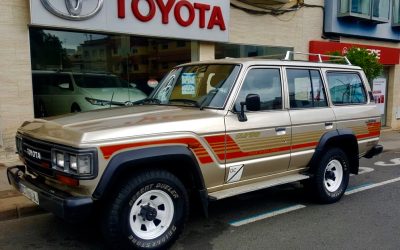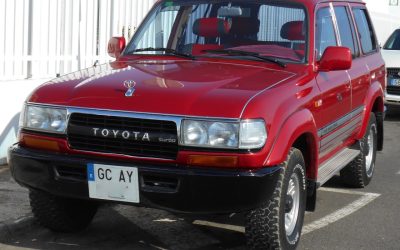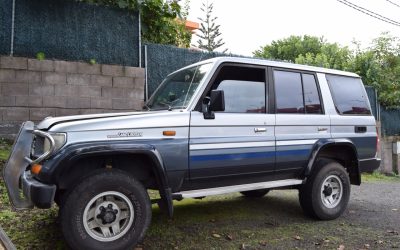

A current ITV is useful evidence. A clean seller description is useful. A thick folder of service receipts is useful.
None of those things, by itself, is a pre-purchase inspection.
When a classic 4×4 is going to be bought remotely and then moved across borders, the standard has to be higher. The buyer is not only deciding whether the vehicle starts, drives, and looks good in photographs. The buyer is deciding whether the vehicle’s identity, structure, mechanical condition, history, modifications, and paperwork make sense together.
At Canary Island Rover, the goal of inspection is not to make every candidate work. It is to collect enough evidence to decide whether the candidate deserves the next step.
If the evidence is weak, contradictory, or expensive, the correct result can be do not buy this vehicle.
Inspection starts before the vehicle
The first inspection is the file.
Before spending time on paint depth, tyre dates, turbo noise, or chassis corrosion, the basic identity of the vehicle needs to make sense.
For a Spanish-registered classic, that normally means comparing the registration documents, chassis or VIN number, model description, engine information where relevant, ITV history, mileage chronology, seller identity, and any useful service or ownership records.
A physical chassis number should agree with the paperwork. The age and model should make sense. The odometer story should not depend on one photograph taken on the day of sale.
This is also why we treat ITV as one evidence layer rather than a complete endorsement. As explained in our guide, ITV Inspections: What They Prove—and What They Don’t, an ITV result can support the vehicle’s roadworthiness history, but it does not replace buyer due diligence.
A good inspection begins with a simple question:
Does the paperwork describe the same vehicle that is sitting in front of us?
Body and paint: look past the shine
Fresh paint can make a tired truck look excellent in photographs. Original paint can look imperfect and still tell a very reassuring story.
The job is not to reward one and punish the other. It is to understand what happened.
Useful questions include:
- Is the paint original, partially repainted, or fully repainted?
- Are the panel gaps consistent?
- Are there sanding marks, overspray, masking lines, or mismatched textures?
- Do the doors, hood, tailgate, and removable panels fit correctly?
- Are there signs of previous accident repair?
- Has filler been used in areas where metal repair would matter?
- Are weather seals old, replaced, or hiding corrosion?
- Do the photographs support the seller’s description?
On a Defender, Land Cruiser, Patrol, G-Wagen, Hilux, or other older utility vehicle, cosmetic perfection is not the objective. A straight, honest body with disclosed repairs can be a better purchase than glossy paint covering unknown work.
Chassis and corrosion: the inspection that photographs often miss
Corrosion is one of the easiest problems to underestimate remotely.
A seller can truthfully photograph a clean door, clean engine bay, and clean visible floor while leaving the difficult areas undocumented. That is why good underbody photography matters.
The inspection should look at the chassis rails, crossmembers, body mounts, suspension mounting points, outriggers where applicable, floors, sills, wheel arches, spring mounts, gutters, windshield areas, door bottoms, seams, and known model-specific corrosion points.
The important distinction is between:
- cosmetic surface oxidation;
- localized repairable corrosion;
- previous repairs that appear properly completed;
- poor patching or hidden repairs; and
- structural deterioration that changes the economics of the purchase.
The Canary Islands are not a magic rust-free zone. Storage, distance from the sea, previous repairs, washing habits, road use, and simple age matter more than a slogan.
A buyer should want documented condition, not a broad “rust-free” promise.
Engine: start it cold
A warm engine can hide information.
When practical, a serious mechanical inspection should begin with a cold start. The vehicle should not have been warmed before arrival merely to make the first start look better.
Things worth observing include:
- how quickly the engine starts;
- smoke color and duration;
- idle quality;
- unusual mechanical noise;
- visible oil, coolant, fuel, or vacuum leaks;
- condition of belts and hoses;
- cooling-system condition;
- oil and coolant appearance;
- engine mounts;
- excessive crankcase pressure or blow-by;
- turbo noise or leakage on turbocharged engines; and
- whether the engine reaches and holds normal operating temperature.
Not every question can be answered by observation. Compression testing, leak-down testing, oil analysis, specialist diagnostics, or a workshop inspection can be appropriate when the vehicle, engine, price, or symptoms justify it.
The point is not to perform every possible test on every vehicle. The point is to identify what evidence is still missing before the buyer commits.
Gearbox, transfer case, differentials, hubs, and lockers
Classic 4×4 drivetrains are simple compared with modern vehicles, but simple does not mean cheap to rebuild.
A road test should evaluate clutch engagement, gearbox synchros, shifting when cold and warm, transfer-case selection, drivetrain vibration, differential noise, wheel-bearing noise, and obvious driveline backlash.
If the vehicle has selectable four-wheel drive, manual hubs, center locking, front or rear differential locks, or an aftermarket air locker, those systems should be operated when conditions allow.
An advertisement that says “triple locked” is not proof that all three lockers engage correctly.
Likewise, a transmission that shifts cleanly around town may behave differently once fully warm, under load, or during deceleration.
Steering, suspension, and brakes
Old 4×4s can feel loose without being unsafe. They can also feel “normal for an old truck” when they actually need substantial work.
The inspection should look for:
- steering-box play or leakage;
- worn tie-rod ends and ball joints;
- deteriorated suspension bushings;
- leaking shocks;
- tired springs;
- uneven ride height;
- wheel-bearing play;
- brake-fluid condition;
- brake pull, vibration, or imbalance;
- damaged brake lines or hoses; and
- modifications that change steering or suspension geometry.
Lifted vehicles deserve extra attention. Spring height, shock travel, caster correction, driveshaft angles, tyre clearance, brake-line length, and the quality of the installed parts all matter.
A modification is not automatically a problem. An undocumented or poorly executed modification can be.
Tyres and wheels tell a story
Tyres are easy to replace, but they reveal useful information.
Uneven wear can point toward alignment, steering, suspension, or axle issues. Cracked sidewalls can reveal age even when tread depth looks good. Mismatched tyre sizes may indicate a temporary spare, inconsistent maintenance, or a modification that was never properly completed.
The inspection should record tyre size, brand, general condition, visible date codes where practical, spare condition, and wheel damage.
For international buyers, this also helps estimate what should be replaced before shipping or immediately after arrival.
Interior and electrical condition
The interior helps test the mileage and ownership story.
A 60,000-kilometre vehicle with deeply worn pedals, collapsed seat bolsters, polished steering controls, torn door cards, and heavy cargo-area wear deserves questions. None of those details proves mileage fraud, but the story should be coherent.
Check the operation of windows, locks, lights, gauges, wipers, washers, heater, air conditioning where fitted, sunroof, mirrors, horn, stereo, auxiliary lighting, winch controls, and aftermarket accessories.
Electrical modifications deserve special attention. Old auxiliary fuse boxes, improvised splices, large inverters, winch wiring, added lights, and battery isolators can be useful equipment or future electrical problems depending on how they were installed.
The road test is where the vehicle has to agree with the photos
A vehicle can look excellent while parked.
The road test asks whether the mechanical systems behave together.
Where practical and legal, the vehicle should be driven through a useful range of conditions: low-speed maneuvering, normal acceleration, braking, gear changes, turns, rougher pavement, and enough operating time to bring fluids and drivetrain components up to temperature.
Listen for noises that appear only under load or on deceleration. Watch the temperature gauge. Check for steering wander, brake pull, clutch slip, vibration, drivetrain whine, suspension clunks, and smoke after the engine is fully warm.
The purpose is not to prove the vehicle is perfect.
The purpose is to discover what the still photographs could not show.
Modifications need their own inspection
A modified vehicle can be excellent. It can also contain several years of unrelated decisions made by different owners.
A suspension lift, engine swap, turbo upgrade, aftermarket locker, winch, snorkel, larger tyres, custom bumper, auxiliary fuel tank, overland electrical system, or interior conversion should be evaluated as part of the vehicle—not treated as bonus value simply because it is expensive equipment.
Questions include:
- Who installed it?
- Is the work documented?
- Is the installation tidy and serviceable?
- Does it interfere with factory systems?
- Is the modification recorded in the Spanish documentation when required?
- Will the destination country, state, insurer, or registration authority care about it?
- Does the modification improve the vehicle for the buyer’s intended use?
The most expensive parts list is not always the best build.
Photos and video should answer questions, not decorate the listing
A useful remote inspection produces evidence.
That means clear photographs of the chassis number, documents, engine bay, underbody, corrosion points, suspension, axle housings, brakes where visible, tyre condition, interior wear, cargo area, roof, door bottoms, seals, known defects, and any repair that deserves explanation.
Video should also have a purpose: cold start, idle, engine bay, exhaust, gauge operation, driving, shifting, braking, four-wheel-drive engagement, or the specific noise or defect under discussion.
A hundred attractive photographs can still be a weak inspection if none of them answer the difficult questions.
The buyer needs enough evidence to understand the vehicle’s condition—not simply enough media to become emotionally attached to it.
What an inspection cannot guarantee
Even a careful inspection has limits.
It cannot see inside every sealed chassis cavity. It cannot guarantee that an old seal will not begin leaking next month. It cannot prove the future life of a turbocharger, injector pump, clutch, gearbox bearing, or electrical component. It cannot guarantee that a destination authority will interpret every modification or document exactly as expected.
A pre-purchase inspection reduces uncertainty. It does not eliminate age.
That distinction matters because classic vehicles should be purchased with a realistic maintenance and contingency budget, not with the expectation that inspection turns a 30-year-old truck into a new vehicle.
Four reasonable inspection outcomes
A useful inspection should end with a decision, not just a folder of photographs.
For a buyer, the evidence normally points toward one of four outcomes:
1. Proceed
The vehicle’s identity, condition, price, documentation, and expected work make sense for the buyer’s brief.
2. Proceed only at a different price
The vehicle is still viable, but documented needs change its value or the amount that should be reserved for preparation.
3. Get a specialist test before deciding
The candidate is promising, but one unresolved issue—compression, cooling, structural repair, gearbox condition, electrical work, or documentation—requires a specialist before purchase.
4. Reject the vehicle
The condition, history, paperwork, cost, or uncertainty does not justify the risk.
Rejecting a candidate is not a failed inspection. It is one of the main reasons to inspect before money, shipping, and emotion make the decision harder.
The CIR position
A classic 4×4 inspection should not begin with the assumption that the vehicle will be purchased.
It should begin with a buyer’s brief: model, budget, destination, intended use, condition standard, originality requirements, and tolerance for repairs.
Then the vehicle has to earn the recommendation.
That means the paperwork has to agree with the chassis. The story has to agree with the wear. The photographs have to show the difficult areas. The road test has to support the mechanical description. Any required work has to fit the budget. And the buyer should still have the option to say no.
Canary Island Rover’s value is not access to one public listing. It is local judgment, physical evidence, documentation review, and coordination that allow a remote buyer to make a more informed decision.
Looking for the right candidate—not just a listing?
Tell us the model, budget, destination, timing, and condition standard you need. The Buyer Survey helps us determine whether your search is a fit before an engagement begins.