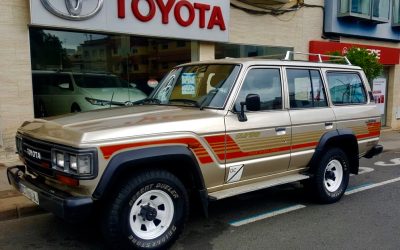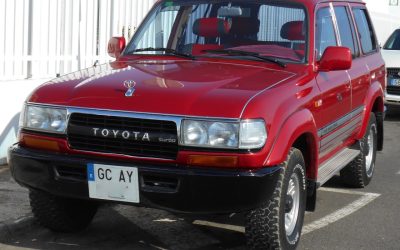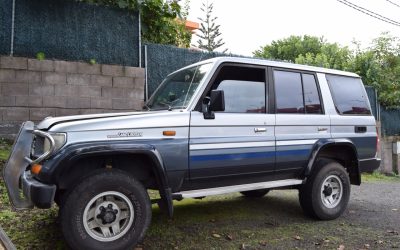

A classic 4×4 can look like a bargain because the asking price is low. That number is easy to compare, easy to remember, and easy to place beside another listing. It is also the number most likely to distort the decision. A $16,000 Land Cruiser, Defender, Patrol, G-Wagen, Hilux, or other older 4×4 can become a more expensive project than a $22,000 example once the real work is counted. Tires, cooling-system repairs, suspension, brakes, corrosion, paintwork, paperwork, storage, and workshop time do not disappear simply because they were not included in the advertisement.
For an international buyer, the more useful question is not, Which vehicle has the lowest asking price? It is, Which vehicle gives me the best realistic outcome after purchase, preparation, transport, import, and first service? That is the difference between comparing listing prices and comparing the real landed cost of a vehicle.
The asking price is only the beginning
The vehicle price is usually the first figure a buyer sees, and it is often the largest single line item. But an international purchase is a chain of costs rather than one transaction. Before the vehicle is ready to use, the buyer may have paid for inspection, mechanical work, export preparation, inland transport, ocean freight, port handling, customs, brokerage, destination delivery, registration preparation, and an initial service. Depending on the vehicle and destination, taxes, duties, VAT, GST, or other charges may also apply.
None of those costs is unusual. The problem begins when they are treated as an afterthought. A vehicle that looks inexpensive at the beginning can become expensive because the buyer only discovers the true project cost after the purchase has already been made. A better approach is to build a realistic range before committing and to treat the purchase price as the first line of the budget rather than the entire budget.
Our Process & Pricing page explains the current CIR fee structure and includes an indicative import-cost estimator designed for this kind of planning. The purpose is not to predict every final invoice in advance. It is to make the major assumptions visible before the buyer becomes committed to a particular vehicle.
Condition is part of the price
Consider two hypothetical 1990s Land Cruisers. Vehicle A is advertised for $16,000 and Vehicle B for $22,000. At first glance, Vehicle A looks like the better deal. Then the inspection begins. The cheaper truck needs four tires, front brakes, cooling-system work, suspension bushings, a leaking steering component repaired, an old chassis patch corrected, and several days of workshop coordination before export. Vehicle B costs more to buy, but its maintenance history is coherent, the underbody is clean, the cooling system has already been serviced, the tires are recent, and the vehicle can move almost directly into export preparation.
The $6,000 difference in asking price can disappear very quickly. At that point, the comparison is no longer $16,000 versus $22,000. It is the realistic cost of Vehicle A in the condition the buyer actually needs versus the realistic cost of Vehicle B in that same condition. Once viewed that way, the supposedly more expensive vehicle may be the more conservative purchase.
This is why condition cannot be separated from value. A buyer can overpay for a beautiful vehicle, but a buyer can also underpay for a vehicle that becomes expensive the moment a workshop starts taking it apart. On classic 4×4s, the expensive surprises are often not the obvious cosmetic ones. They may be hidden in chassis repairs, cooling systems, steering boxes, suspension joints, wheel bearings, clutch wear, transfer cases, differentials, brake hydraulics, fuel systems, or old electrical modifications.
The low-priced candidate has to survive inspection before it can be called inexpensive. Our guide, Before You Buy: What a Classic 4×4 Pre-Purchase Inspection Should Cover, explains the evidence we want before a candidate earns a recommendation.
Deferred maintenance is a hidden purchase price
Deferred maintenance does not disappear because the seller has not performed it. It simply transfers to the next owner. If a vehicle needs $2,500 of predictable work within the first month, that amount belongs in the acquisition decision even if the invoice has not yet been written. The same is true of tires that still have tread but are old, a timing belt with no reliable replacement record, a cooling system running on aged hoses, or suspension components that technically still function but are nearing the end of their useful life.
This is one reason an apparently higher-priced vehicle can make financial sense. If the premium is supported by documented servicing, better structure, clean original bodywork, recent tires, correct maintenance, and fewer immediate needs, the buyer may be paying more at purchase in order to spend less during the first year of ownership. That is not automatically overpaying. It is paying for evidence and condition rather than for the hope that a cheaper vehicle will not reveal expensive problems later.
Paperwork can turn a good vehicle into a bad international purchase
Mechanical condition is only part of the equation. A very good vehicle can still be a poor international purchase if its paperwork is weak. The chassis or VIN number, Spanish registration documents, ownership information, ITV history, manufacture date, modification records, export documentation, and destination eligibility all have to make sense together.
A documentation problem may be solvable, but solvable does not mean free. It can mean delays, specialist help, repeated appointments, storage, administrative fees, or a transaction that eventually has to be abandoned. Those costs do not appear in the sales photographs, but they can materially change the value of the vehicle to an overseas buyer.
The same principle applies to import eligibility. The U.S. 25-year exemption, for example, should never be reduced to “old enough equals easy import.” The actual manufacture date and the entry documents still matter. Our guide, The U.S. 25-Year Rule Explained: What It Does—and What It Doesn’t, covers that distinction in more detail.
Shipping does not rescue the wrong purchase
Shipping is often treated as the expensive part of importing a classic vehicle. Sometimes it is, but freight is at least visible and usually quotable. The greater risk is paying to ship a vehicle that should never have been purchased in the first place.
Once the wrong vehicle is bought, every later cost compounds the original mistake. The purchase price is followed by preparation, transport to the port, ocean freight, customs, inland delivery, registration, and the first workshop visit. By the time the buyer discovers the true condition, reversing the decision can be extremely expensive.
This is why spending money on due diligence before purchase can be more valuable than saving a small amount on the asking price. A rejected vehicle does not produce a dramatic delivery photograph, but it can still be an excellent financial outcome. Avoiding a poor purchase preserves the buyer’s budget for the vehicle that actually deserves it.
A current ITV is useful evidence, not a valuation
A current Spanish ITV can be useful. It can show that the vehicle passed a regulated roadworthiness inspection on a particular date, help establish a mileage timeline, and reveal recorded defects. It can also support a seller’s claim that the vehicle is road legal and in regular use. What it cannot do is tell the buyer what the vehicle is worth or replace a detailed buyer inspection.
As explained in ITV Inspections: What They Prove—and What They Don’t, a favorable ITV does not guarantee clean hidden chassis areas, a healthy gearbox, a strong cooling system, or freedom from deferred maintenance. It is one layer of evidence. The purchase decision still has to include condition, history, documentation, price, and destination.
The wrong specification can be expensive even when the vehicle is good
A vehicle can be mechanically sound and still be the wrong buy. The wrong engine, gearbox, body style, seating configuration, roof type, axle setup, or modification history can reduce its value to a particular buyer. A client may be looking for left-hand drive, a specific diesel engine, a manual transmission, factory air conditioning, limited modifications, or easy parts support at the destination. A cheaper candidate that misses several of those requirements may cost less to purchase while delivering a worse ownership experience.
Changing vehicles later is usually more expensive than waiting for the right configuration. That is one reason Canary Island Rover begins a commissioned search with the client’s brief rather than with a vehicle we need to sell. Our article Why Canary Island Rover Is a Consultancy, Not a Used-Car Dealer explains that alignment in more detail.
The better comparison is landed and ready
“Landed cost” is a useful phrase, but it can still be incomplete. A vehicle can physically arrive at the destination port and remain far from ready for the client to use. A more realistic comparison is the landed-and-ready cost: the vehicle price, known pre-export work, CIR professional fees, transport and shipping, destination import costs, inland delivery, immediate destination service, and a sensible contingency for known uncertainty.
That total will never be perfectly exact before purchase, and it does not need to be. The purpose is to make the decision with a realistic range rather than pretending the asking price tells the whole story. A buyer in Florida, Ontario, Belgium, or Germany may face very different destination costs, just as a clean one-owner HDJ80 and a partially restored Defender may require very different preparation budgets.
Our preference is to show those assumptions rather than compress them into one attractive “all-in” number. The vehicle price should remain visible. CIR’s professional fees should remain visible. Workshop invoices should remain visible. Freight should remain visible. Destination costs should be estimated with appropriate qualifications. That gives the buyer a clearer picture of what is being purchased and who is being paid for each part of the project.
The best bargain may be the vehicle you do not buy
A low-priced candidate can create urgency. Someone else may buy it, the seller wants an answer, the photographs look good, the specification is close, and the buyer may already be tired of searching. That is precisely when process matters most.
If the inspection shows that the total project no longer makes sense, walking away can be the correct decision. The money not spent on the wrong truck remains available for the right one. That is not a failed search. It is disciplined sourcing.
Canary Island Rover is not trying to identify the lowest asking price in the Canary Islands. We are trying to help a contracted buyer identify the best available candidate for the actual brief and total project budget. Sometimes that will be the cheapest vehicle. Often it will not.
The right vehicle has to make sense as a whole: specification, condition, history, documentation, required work, purchase price, shipping, destination, timing, and remaining risk. The goal is not to win the advertisement. The goal is to be satisfied with the vehicle after it has been inspected, purchased, transported, imported, serviced, and put into use.
Compare the full project before you commit
Review the current CIR process, professional fees, and indicative import-cost estimator before starting a search. If the numbers and timing fit your plan, the Buyer Survey gives us the brief we need to evaluate the market properly.
Related CIR guides
- The True Cost to Import a Classic 4×4 From the Canary Islands
- Before You Buy: What a Classic 4×4 Pre-Purchase Inspection Should Cover
- Why Canary Island Rover Is a Consultancy, Not a Used-Car Dealer
- ITV Inspections: What They Prove—and What They Don’t
- The U.S. 25-Year Rule Explained: What It Does—and What It Doesn’t
- Delivered Vehicles archive