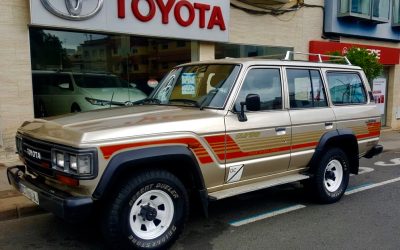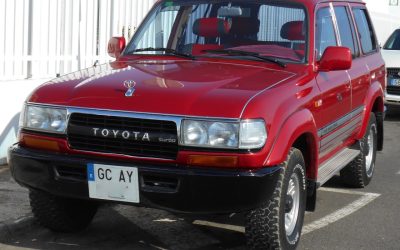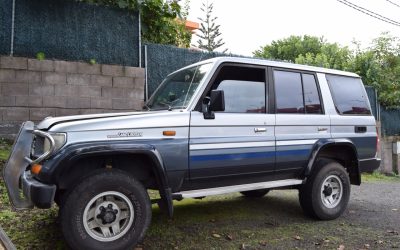

Every serious classic 4×4 buyer eventually asks the same question:
“Why not just buy one from Japan?”
It is a fair question. Japan has earned its reputation as a source for interesting, well-specified, often unusually complete vehicles. For certain models, trims, and buyers, it is absolutely the right place to look. Pretending otherwise would not help anyone.
The Canary Islands are not a replacement for Japan. They are a different source market with different strengths, different risks, and a different kind of buyer in mind.
The honest answer is simple: Japan is often better when the exact vehicle you want is Japanese-market, rare, or highly spec-specific—and you are genuinely comfortable with right-hand drive. The Canary Islands can be the better choice when left-hand drive, direct local inspection, Spanish-market documentation, and a more personal sourcing process matter more than catalogue depth.
This is not a sales pitch against Japan. It is the comparison we would want a buyer to read before committing to either route.
First, choose the vehicle—not the mythology
Both markets attract myths.
Japan is sometimes described as a place where every old 4×4 is pristine, low-mileage, and accurately graded. It is not. There are excellent vehicles, tired vehicles, fresh cosmetic work, northern-climate corrosion, modified trucks, and examples that look much better in a listing than they do in person.
The Canary Islands are sometimes described as a place where nothing rusts. That is not true either. The islands do not have the same winter-road-salt cycle as northern snow-belt markets, but coastal air, outdoor storage, deferred maintenance, accident repair, and hard use still matter. An island vehicle deserves an underbody inspection every bit as much as a Japanese vehicle does.
Country of origin is a filter. It is not a condition report.
The better source is the one that gives you the right vehicle, in the right configuration, with the right evidence, at a sensible landed-and-ready number.
The practical dividing line: left-hand drive versus right-hand drive
This is the point buyers should settle before looking at the first listing.
Japan drives on the left, so vehicles built primarily for its domestic market are generally right-hand drive. That is not a defect. For the right buyer, it is part of the appeal. A Japanese-market Land Cruiser, Pajero, Patrol, Delica, or other JDM-only configuration can offer equipment, engines, colors, and trim combinations that may never have been sold elsewhere.
But right-hand drive is not a free extra. In a left-driving country, it changes the daily experience and can change the future buyer pool. Some owners adapt immediately and never look back. Others decide after six months that they would rather have the steering wheel on the left. Neither answer is wrong; it is simply better to make that decision before the vehicle is on a ship.
For buyers in the United States, Canada, mainland Europe, and other right-side-traffic markets, a left-hand-drive vehicle can be the more natural ownership choice. It can also be easier to explain to a future buyer. That does not mean every right-hand-drive import is hard to sell. A rare and desirable Japanese model can have a strong enthusiast market. It means the decision should be intentional rather than accidental.
If left-hand drive is non-negotiable, the Canary Islands start with a major advantage. Spanish-market vehicles are generally left-hand drive, and CIR’s search is built around that reality.
Where Japan is genuinely stronger
1. Depth of inventory for specific Japanese models
Japan can be the better place to begin when the request is extremely specific: a certain Land Cruiser series, a Japanese-only trim, a diesel/manual combination, an unusual body style, a factory-option package, or a particular generation that was sold there in meaningful numbers.
That depth matters. A buyer looking for a precise Japanese-market configuration may see more candidates in a week than a smaller source market can produce in months. The right question is not whether Japan has more options. It often does. The question is whether those options match the way you want to own, drive, service, and eventually sell the vehicle.
2. Japanese domestic-market specification
Some buyers want the JDM experience on purpose: factory equipment, interior details, drivetrains, or versions never offered through European or North American channels. If that is the appeal, trying to force the search toward a left-hand-drive alternative can be counterproductive.
Buy Japan when the Japanese specification itself is the point of the purchase.
3. A structured export ecosystem
Japan has long-established vehicle inspection, registration, and export systems. Japanese Customs also has defined procedures for exporting used vehicles, including documentation tied to registration deletion or planned export. That does not make the paperwork effortless, but it does mean the export process is a known, formal part of the transaction.
For an experienced Japan-based exporter and a buyer who understands the process, this can work very well. The same rule still applies: a formal process is not the same thing as a guarantee of the individual vehicle’s condition.
Where the Canary Islands can be stronger
1. Left-hand drive without conversion or compromise
This is the obvious point, but it deserves more weight than it usually gets. A left-hand-drive classic is not merely familiar to a buyer in a right-side-traffic country. It can affect the everyday ownership experience, passenger comfort, practical visibility, and future market fit.
For a buyer who wants a European-spec Land Cruiser, Defender, G-Class, Patrol, or other classic 4×4—and wants to use it regularly in the United States, Canada, or mainland Europe—starting with left-hand drive can eliminate a major decision before it becomes a shipping invoice.
2. Local, in-person judgment before a buyer commits
An auction sheet, a translated grade, and a long photo set can be useful evidence. They are not a road test. They do not replace a local person opening the doors, looking underneath, reading the paperwork, checking the details that do not make the listing, and deciding whether the candidate deserves the buyer’s attention.
That is the value of a local sourcing relationship. CIR searches a smaller market than Japan, but the service is not a remote listing feed. It is local access, direct inspection, a practical conversation about condition, and the freedom to walk away from a vehicle that does not make sense.
A buyer who wants to bid broadly from a large auction pool may prefer the Japan route. A buyer who wants one person accountable for narrowing a smaller field in person may prefer the Canary Islands route.
3. Spanish-market record checks and ITV context
For a Spanish-registered vehicle, the Dirección General de Tráfico (DGT) offers vehicle reports that can provide technical and administrative information, including ITV status and other available vehicle data. Depending on the report type and the information held for that vehicle, these records can help frame questions about inspection history, mileage entries, ownership, recalls, or administrative issues.
That information is useful evidence, not proof that a vehicle is perfect. A clean record cannot see through fresh underseal, poor repairs, or deferred maintenance. It can, however, make the inspection more focused and make the history conversation more concrete.
4. A more direct relationship between search and decision
Japan can be fast, especially when a buyer is ready to act at auction. But speed has a cost when the decision is built around limited source-side access. The Canary Islands approach is deliberately slower at the front end: clarify the actual brief, find a candidate, inspect it, document it, discuss it, then decide.
For a buyer who has waited years for the right 4×4, that slower first step can be the cheaper one.
Condition: neither country gets a free pass
This is where the comparison becomes less glamorous and more useful.
A Japanese vehicle can have appealing presentation, coherent records, and still need a serious underbody review. Northern and coastal use, age, modifications, repairs, and storage conditions all leave their own signatures.
A Canary Islands vehicle can benefit from a mild climate and the absence of winter salt treatment, while still suffering from sea air, sun exposure, long stationary periods, or the local habit of fixing what is visible before selling what is not.
There is no honest shortcut here. The correct process is the same in both places:
- confirm identity and manufacture date;
- review the documents available for that market;
- inspect the chassis, body, mechanical systems, and modifications;
- drive the vehicle where possible;
- price the known work before purchase; and
- keep a reserve for the work that reveals itself after delivery.
Japan may produce a better candidate. The Canary Islands may produce a better candidate. The country does not remove the need to inspect.
Documentation: useful evidence, never a substitute for seeing the truck
Japanese auction documentation can be valuable when it is accurately translated and read in context. Spanish DGT and ITV information can be valuable when it is available and understood in context. Service stamps, invoices, owner stories, and mileage claims can all help.
None of them is a substitute for physical evidence.
The question is not, “Do we have paperwork?” The question is, “Does the paperwork agree with the vehicle in front of us?”
At CIR, the practical standard is straightforward: use documentation to direct the inspection, not to avoid it.
Freight, customs, and cost: do not compare sticker prices
A Japanese listing price and a Canary Islands asking price are not comparable until the full route is on the table.
Both paths can involve source-side fees, export documents, inland transport to port, ocean freight, marine insurance, customs brokerage, destination-side government charges, port charges, local delivery, registration, and initial service work. Freight availability and pricing move with the route, the vehicle, the departure and arrival ports, the shipping method, and the calendar. There is no responsible universal statement that one source is always cheaper to ship from.
The same applies to vehicle condition. A low auction hammer price is not a landed cost. A higher-priced left-hand-drive vehicle with clean documentation and fewer immediate needs may be the better purchase. Conversely, a Japan-sourced truck with rare specification and excellent underlying condition may be worth more than a seemingly similar European vehicle.
Compare landed-and-ready cost, not purchase price.
For a fuller breakdown of the expense categories, read The True Cost to Import a Classic 4×4 From the Canary Islands.
For U.S. buyers, the 25-year rule does not care which country you choose
A Japan-versus-Canary-Islands decision does not override U.S. import eligibility. For nonconforming vehicles, the commonly used NHTSA safety exemption applies only once the vehicle is at least 25 years old from its date of manufacture, not merely its model year. EPA treatment is separate; its older-vehicle exemption has its own age and original-configuration requirements.
This matters especially with Japan, where a desirable model may appear in the market before the exact individual vehicle is eligible. A “1991 model” is not automatically importable on 1 January 2016; the actual manufacturing date is what matters for the NHTSA age calculation.
Confirm the individual chassis, manufacture date, engine configuration, and destination treatment before money changes hands. Import eligibility is not the place for assumptions.
The honest comparison at a glance
| Question | Japan | Canary Islands |
|---|---|---|
| Best for | Specific JDM models, rare trims, Japanese-market specification, and buyers comfortable with RHD. | LHD classic 4×4s, European-market specification, direct local inspection, and buyers who want a narrower but more personal search. |
| Drive side | Usually RHD for Japanese domestic-market vehicles. | Usually LHD for Spanish-market vehicles. |
| Inventory depth | Often stronger for Japanese makes and specific JDM configurations. | Smaller market; the search may require more patience. |
| Condition certainty | Documentation and auction data can help, but an independent inspection remains essential. | Local in-person inspection and Spanish vehicle-report/ITV context can help, but an inspection remains essential. |
| Corrosion question | Vehicle-specific. Climate, storage, northern use, coastal use, and prior repairs all matter. | Vehicle-specific. Mild climate helps one part of the story; sea air and storage history remain important. |
| Cost comparison | No automatic bargain once export, freight, destination costs, and work are included. | No automatic bargain once export, freight, destination costs, and work are included. |
| The deciding question | Do you want the Japanese-market vehicle enough to embrace RHD and a Japan-based purchase process? | Do you want an LHD vehicle and a local, inspection-led search enough to accept a smaller inventory pool? |
Who should choose Japan?
Start with Japan when most of these are true:
- you want a Japanese-market-only model, trim, or configuration;
- you are comfortable owning and driving right-hand drive in your destination;
- you understand that a translated auction sheet is not a mechanical inspection;
- you are prepared to work with a Japan-based exporter or independent inspector; and
- the exact vehicle matters more than left-hand-drive familiarity.
Who should start in the Canary Islands?
Start with the Canary Islands when most of these are true:
- left-hand drive is important to you;
- you want a European-spec classic 4×4 rather than a JDM-only variant;
- you prefer a person on the ground to inspect, photograph, and discuss candidates before you decide;
- you value Spanish-market documentation and ITV context where available; and
- you would rather wait for the right vehicle than bid broadly on remote inventory.
The CIR position: choose the route that fits the buyer
Canary Island Rover exists because there are buyers for whom the Canary Islands are the better answer. That does not mean Japan is a bad answer. In some cases, we would tell a buyer plainly that Japan is where their search should begin.
The useful conversation is not “Which country wins?” It is:
- What vehicle do you actually want?
- Is left-hand drive a requirement or a preference?
- How much uncertainty are you willing to accept before the vehicle is physically inspected?
- Where will the vehicle be registered and used?
- What is the true landed-and-ready budget?
Once those answers are clear, the right source market becomes much easier to see.
Start with the vehicle brief, not the first listing
Tell us the model, budget, destination, timing, and whether left-hand drive is a requirement. We will tell you whether a Canary Islands search is the sensible first route.
Official checks referenced in this article
- Japan Automobile Federation — Traffic Rules in Japan (Japan keeps left.)
- Japan Customs — Customs Procedures for Exporting Used Vehicles (export-related registration documentation.)
- Dirección General de Tráfico — Informe de un vehículo (Spanish vehicle-report information.)
- NHTSA — Importation and Certification FAQs (25-year safety exemption measured from date of manufacture.)
- U.S. EPA — Learn About Importing Vehicles and Engines (separate EPA requirements and import guidance.)
Regulatory note: This article is a planning guide, not customs, tax, registration, legal, or mechanical advice. Import eligibility, freight availability, destination-side charges, and local registration rules can change. Confirm the actual vehicle, its date of manufacture, its configuration, and destination requirements before purchase.